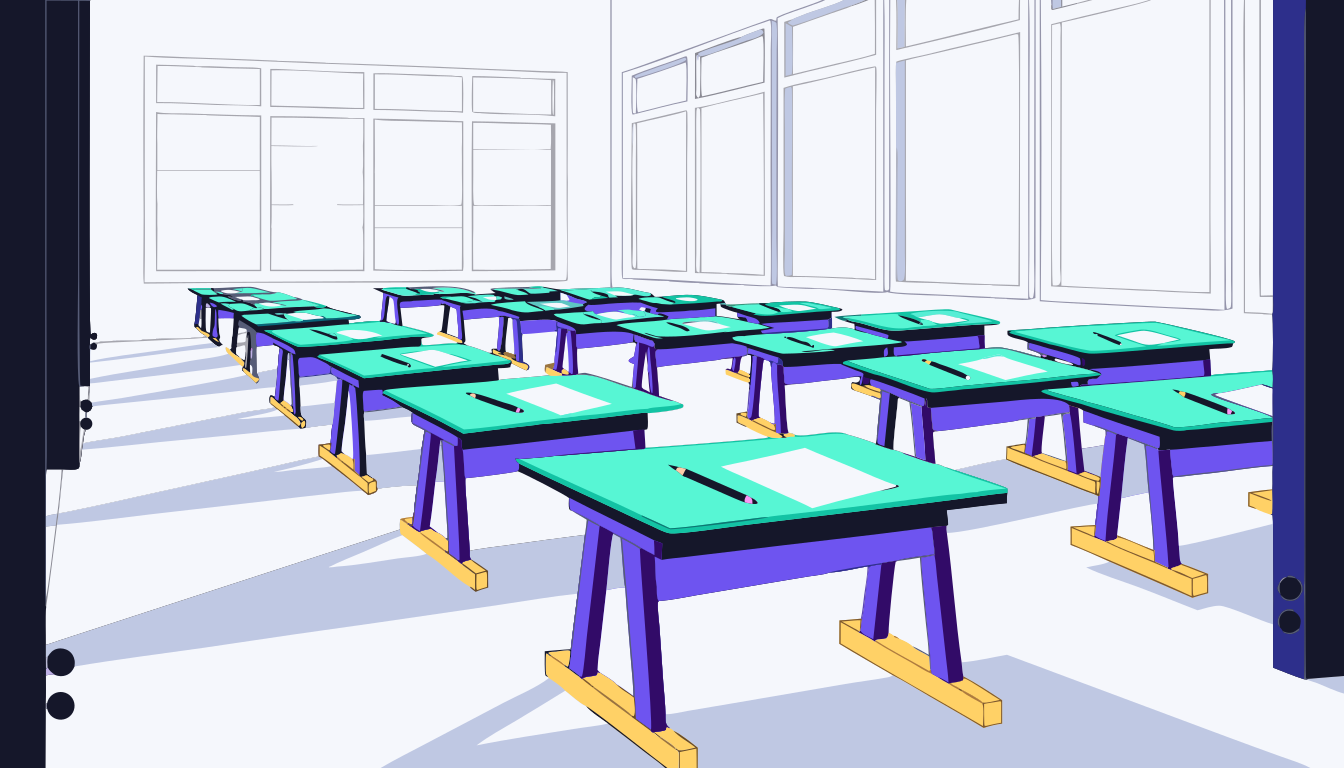
The mocks playbook
Why timed 11+ mocks matter — and how to run them well at home
A child can know every topic on the syllabus and still lose marks in the real 11+ simply because the clock changes how they work. GL Assessment papers — the format most grammar schools use — are multiple-choice, tightly timed and sat with no calculator, so pace and stamina are skills in their own right. A mock paper is where those skills are built. Every mock, marking scheme and OMR sheet on Quest Arena is completely free, so you can run a full exam-day rehearsal as often as you like without paying a penny.
Why timed practice beats untimed practice
Working through questions with no time limit tells you whether your child can do something. A timed mock tells you whether they can do it quickly and accurately, under pressure, when they are tired — which is what the real exam actually measures. The two are different skills. Under the clock, children learn to read a question once, commit to an answer, mark the OMR sheet cleanly and move on, rather than agonising over a single item while the paper runs away from them.
- Pacing. Children discover how long a question can take before it becomes a poor use of time, and when to skip and return.
- Transfer accuracy. On GL-style papers, answers go on a separate multiple-choice grid. Timed mocks build the habit of transferring answers without slips or misaligned rows.
- Composure. The first timed paper is often a shock; by the fifth, the format feels ordinary. Familiarity is the single biggest cure for exam nerves.
- Honest data. A timed score under realistic conditions is far more useful for planning revision than a relaxed, untimed run-through.
How to sit a mock at home so it counts
A mock only builds exam readiness if the conditions resemble the real thing. You do not need a hall — you need a quiet table, a timer your child can see, and a firm rule that the paper is not interrupted once it starts.
- Print the paper and its OMR answer sheet in advance. Have two sharp pencils and an eraser ready — no pens, no calculator.
- Clear the table of books, phones and clutter. Put a visible clock or timer where your child can glance at it.
- Read the instructions on the front once, together, then start the timer and step back. Resist the urge to help mid-paper.
- When the time is up, stop — even if the paper is unfinished. An unfinished paper is real, useful information about pace.
- Take a short break before marking, so review feels like a fresh, calm activity rather than a continuation of the test.
When you are ready to move beyond the living room, a centre mock adds unfamiliar surroundings and other children to the mix — the closest rehearsal to exam day. Home mocks and centre mocks do different jobs, and both belong in a good plan.
Rough timings to aim for
Exact timings vary by region and by school, so always check the format for your target school. As a working guide for pacing practice, the table below shows the kind of length and question density GL-style 11+ papers tend to use.
| Skill area |
Typical length |
What it rewards |
| English |
Around 40–50 minutes |
Comprehension, inference, vocabulary, spelling & grammar |
| Maths |
Around 40–50 minutes |
Accurate mental arithmetic, worded problems, no calculator |
| Verbal Reasoning |
Around 40–60 questions, briskly timed |
Pattern spotting in words, codes, logic and vocabulary |
| Non-Verbal Reasoning |
Short and fast, often under a minute per item |
Shape, sequence and spatial reasoning at speed |
These figures are general guidance for practice, not official specifications. Confirm the exact paper structure and timings with your target school before exam day.
Marking and reviewing — where the real gains happen
The score is the least useful thing a mock produces. The value is in the review. Every Quest Arena mock comes with a full marking scheme, so mark the paper honestly against it, then spend more time on the review than on the paper itself.
- Sort every wrong answer into one of three buckets: a careless slip, a gap in knowledge, or a question that ran out of time. Each needs a different fix.
- Careless slips are usually a pace or transfer problem — slow down slightly, or check the OMR row before moving on.
- Knowledge gaps point straight to a revision task. Note the topic and drill it with targeted worksheets before the next mock.
- Timed-out questions mean the pacing strategy needs work — practise skipping the hardest item and banking the easier marks first.
- Keep a simple error log across mocks. When the same topic appears three times, it has earned a dedicated revision session in the revision hub.
Building exam stamina over time
Concentration is a muscle. A child who has only ever done ten-minute bursts will fade badly in the second half of a real paper, losing easy marks through tiredness rather than ability. Stamina is built gradually: start with single subject papers, then pair two papers with a short break between, mirroring how a real exam morning is structured. In the final weeks before the test, sit a full sequence of papers in one sitting so the length feels normal.
Space mocks out — roughly one full paper a week during the main run-up — so there is always time to act on the review before the next one. A mock with no follow-up revision is just a test; a mock followed by targeted practice is a training session. For a full timeline of when to start and how to build up, see our exam guides and the 11+ key dates page. If your target school uses GL papers, our notes on GL 11+ papers explain exactly what to expect.
Frequently asked questions
How often should my child sit a mock paper?
Roughly one full timed paper a week in the run-up to the exam works well for most children. That leaves enough time to review the paper properly and turn its mistakes into a revision task before the next one. More frequent mocks with no review in between add stress without adding learning.
Is a low mock score something to worry about?
Not on its own, especially early on. Mocks are for finding weaknesses while there is still time to fix them, so a low early score is doing exactly its job. Watch the trend across several papers rather than any single result, and remember that grammar school entry uses age-adjusted Standard Age Scores, so a child's exact position depends on far more than one raw mark.
Are Quest Arena's mock papers really free?
Yes — every mock paper, marking scheme and OMR answer sheet on Quest Arena is completely free to download. There is no paywall and no premium tier. Create a free account to unlock the full library and track your practice across subjects.